Key points
- C36000 is a leaded brass. Lead is added on purpose to make it easy to machine. That’s a fact about the alloy—not about any particular stamp.
- “Lead-free” needs a stated basis: which alloy, which limit, which test, on which batch.
- Composition, contact conditions and warning obligations are three different questions with three different kinds of evidence.
- There is no “Prop 65 certified” or blanket “FDA approved” status for a bar tool. Treat those phrases as a prompt to ask more.
- Price, color and country of origin don’t tell you the alloy. Documentation does.
Brass is a family, not a specification
Brass is an alloy of copper and zinc, often with small additions that change how it machines, casts, or resists corrosion. Dozens of brasses are catalogued under the Unified Numbering System (UNS), each with its own composition limits. Two stamps can both be “solid brass” and have meaningfully different chemistry.
That’s why the most useful single question you can ask about any brass product is: which alloy is it? A UNS number such as C36000 or C69300 is a starting point you can actually look up. The word “brass” on its own isn’t.
C36000, lead-free brass, and 304 stainless
Three materials come up most often in conversations about ice stamps. Here’s what each one is—and what it can’t tell you on its own.
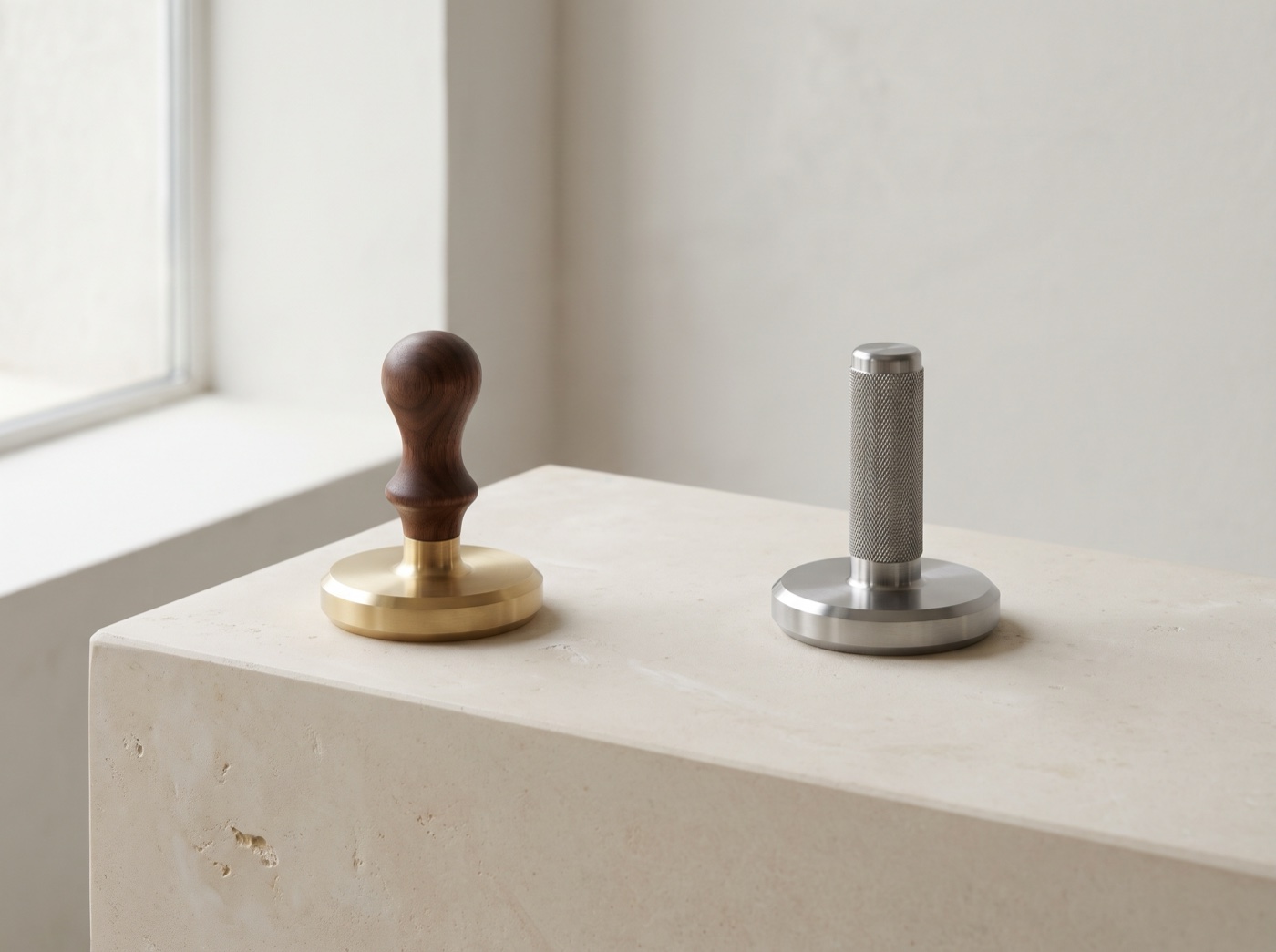
C36000
- What it is
- “Free-cutting brass.” Roughly 60–63% copper and 2.5–3.7% lead, with zinc making up the balance.
- Why it’s used
- The lead breaks chips cleanly during machining, so parts cut fast and finish well.
- For an ice stamp
- Lead is a deliberate part of the alloy. Ask whether the contact face is made from it.
Lead-free brass
- What it is
- Copper alloys formulated with very low lead, using elements such as silicon or bismuth to keep them machinable. C69300, a silicon brass, is one example.
- Why it’s used
- Brass color and workability, without relying on lead for machinability.
- For an ice stamp
- “Lead-free” isn’t “zero lead.” Ask which limit the claim refers to and see the batch test.
304 stainless
- What it is
- An austenitic stainless steel, nominally about 18% chromium and 8% nickel (often called 18/8). Lead isn’t an alloying element.
- Why it’s used
- Corrosion resistance and easy cleaning; widely used in food equipment.
- For an ice stamp
- Conducts heat more slowly than brass, so contact time differs. Grade, surface finish and residues still matter.
| Question | C36000 | Lead-free brass | 304 stainless |
|---|---|---|---|
| Is lead added on purpose? | Yes, 2.5–3.7% | No; kept low by design | No |
| Does the name prove the content of a given stamp? | No—needs batch documentation | No—needs batch documentation | No—needs a mill certificate |
| Acidic food contact | Copper alloy limits apply | Copper alloy limits still apply | Generally more resistant; check finish |
| Behavior on ice | Fast heat transfer | Fast heat transfer | Slower; expect longer contact |
| What to ask for | Confirmation it is not the contact face | Alloy, limit, lab report | Grade certificate, finishing |
Finish & machining notes
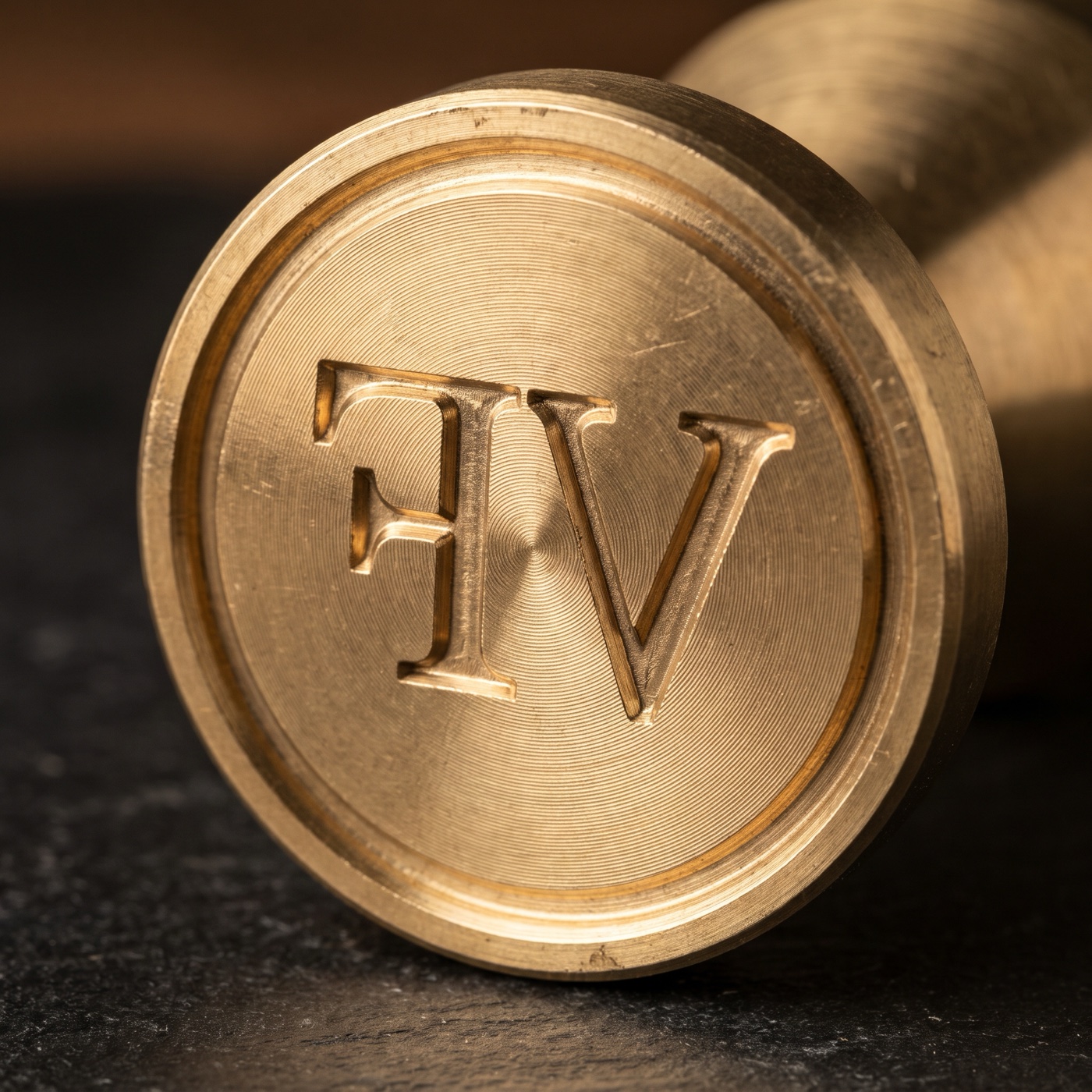
- Machinability isn’t a safety claim. Lead helps C36000 cut cleanly; lead-free alloys rely on elements such as silicon or bismuth instead. A crisp cut tells you about the machining, not the chemistry.
- Tool marks are normal. Fine concentric rings on a recessed background are the path of the cutter. They sit below the raised artwork that meets the ice.
- Ask about the contact face. Polishing compounds, coatings and plating are separate materials. Ask how the face is finished and cleaned after machining.
Lead content, in context
It helps to see the numbers side by side—and to be clear about what each line on the chart actually represents.
Our specification on the same scale
Here is the same comparison with our own target alloy added: a bismuth lead-free eco-brass. Use the log view to see all three values at once; on a linear scale our bar is barely visible.
Lead-free metallurgy, on one honest scale.
-
Bismuth lead-free eco-brassVelt & Forge target spec · optical-spectrometer reading of an alloy sample~0.0022% Pb≈ 22 ppm
-
US NSF/ANSI 372 lead-free thresholdWeighted-average limit for drinking-water plumbing · reference benchmark0.25% Pb2,500 ppm
-
Free-machining C36000 brassCommon in industrial and unlabeled machined parts · nominal range2.5–3.7% Pb25,000–37,000 ppm
At ~0.0022% Pb, our target alloy sits over 110 times below the 0.25% NSF/ANSI 372 lead-free threshold, and over 1,000 times below the bottom of the C36000 range. On a linear scale our bar is barely a sliver; switch to the log view to see all three.
- What this is: a metallurgical alloy specification. The ~22 ppm figure comes from an optical-spectrometer reading of a supplier alloy sample, and every production batch is spectrometer-checked before dispatch. The batch report (laboratory, method, detection limit) is published before orders open.
- What it is not: a food-safety certification or a promise of zero lead. The 0.25% line is the US lead-free definition for drinking-water pipes, fittings and fixtures, shown as a benchmark; an ice stamp is not a plumbing product and is not NSF-certified by this comparison.
- C36000: nominal lead range from published Copper Development Association alloy data. It describes the alloy, not any particular seller’s product.
Composition, contact, and warnings are different questions
Most confusion about “lead-free” comes from treating three separate questions as one. A composition report doesn’t tell you about exposure under use. A warning label—or the lack of one—doesn’t measure composition. Each needs its own evidence.
California Proposition 65, in plain terms
Proposition 65 is a California law that requires businesses to give a clear and reasonable warning before knowingly and intentionally exposing people in California to chemicals on the state’s list, unless an exemption applies—for example, when the exposure is below the relevant “safe harbor” level, or the business has fewer than ten employees. Lead and lead compounds are on the list as chemicals known to cause cancer and birth defects or other reproductive harm.
A few things follow from how the law works:
- A warning is not a test result. It concerns potential exposure; it doesn’t, by itself, measure the exposure from a particular use.
- No warning is not proof of zero lead. The law turns on exposure and exemptions, not on a simple ingredient list.
- The state doesn’t certify products. “Prop 65 certified” or “Prop 65 approved” isn’t an official status. A seller can explain how they assessed the warning question—ask them to.
NSF/ANSI 372 and the 0.25% benchmark
In the US, the Safe Drinking Water Act defines “lead free” for pipes, fittings and fixtures as a weighted average of no more than 0.25% lead across the surfaces that contact drinking water. That definition took effect nationally in January 2014. NSF/ANSI 372 is the standard commonly used to evaluate and certify plumbing products against it.
You’ll sometimes see this benchmark cited for ice stamps. It’s useful context, but it’s worth being precise about what it is:
- It was written for drinking-water system components—an ice stamp isn’t one.
- A product isn’t “NSF 372 certified” just because its alloy could meet the threshold; certification is issued for specific products by an accredited body.
- If a seller cites 0.25% or NSF/ANSI 372, ask whether they mean the alloy specification, an in-house test, or an actual third-party certification—and for which item.
Brass and acidic contact: a separate limit
Lead isn’t the only consideration with copper alloys. The FDA Food Code—a model code that state and local agencies adopt—says copper and copper alloys such as brass shall not be used in contact with food that has a pH below 6, such as vinegar, fruit juice or wine (with narrow exceptions, such as certain brewing equipment). Whether your jurisdiction applies it depends on local adoption, but the principle is sound.
That’s why we recommend stamping plain water ice, before the drink is poured, and never leaving a brass face in a finished cocktail or using it on citrus or flavored ice. “Lead-free” doesn’t remove that limitation.
If you see “FDA approved” on a bar tool, ask what it refers to. FDA authorizes food-contact substances; it doesn’t issue a general approval for a finished ice stamp.
4 questions to ask any ice stamp vendor
Send these before you buy—from us or anyone else. A good seller will answer in writing, for the specific item you’d receive. Tick each one off as you get an answer.
Vendor question checklist
-
“Brass” or “stainless” isn’t enough. You want a grade you can look up, and to know it applies to every batch.
Which alloy grade (UNS number) is the stamp face made from, and is it the same for every production batch? -
A claim should name its limit and point to a test: who ran it, how, how sensitive it was, and on what.
What limit or standard is your “lead-free” claim based on, and can you share the composition report for this batch—laboratory, method, detection limit and date? -
Composition isn’t the same as suitability for use. Make sure the documentation matches how the stamp is actually used—and the whole tool.
Does your documentation cover brief contact with plain water ice and your recommended cleaning method, and does it apply to the whole stamp, including the handle and fasteners? -
Warning obligations and food-contact rules depend on where the product is sold, not just what it’s made of.
Have you assessed whether a Proposition 65 warning applies for sales to California, and which food-contact rules did you consider for the UK or Australia if you ship there?
Tick each question once a vendor has answered it in writing.
How to read a material report
When a seller does share documentation, check that it actually answers your question:
- What it applies to. The report should name the material, product or batch—not a generic alloy sheet for something else.
- Who and when. A named laboratory and a date. Recent and traceable beats glossy and undated.
- Method and detection limit. Handheld XRF is a useful screening tool; laboratory methods are typically used for precise figures. “Not detected” only means below the stated detection limit.
- Scope. A composition test doesn’t cover migration under use, and neither covers warning obligations.
- Match to the SKU. Handles, ferrules, fasteners and coatings can be different materials from the face.
We’re not saying every brass stamp is made from C36000, that a low price means a stamp contains lead, or that any particular seller’s product is unsafe. Those are questions for documentation, not assumptions. This guide is general information, not legal advice.
Where we stand, honestly
Our 2-inch lead-free brass ice stamp is in pre-launch. We have not yet published a material report for it, so we don’t sell it yet. Before orders open, we’ll publish the contact-face alloy grade, a batch composition report with laboratory, method and detection limit, the basis for our “lead-free” claim, the testing scope for brief plain-ice contact, the full bill of materials, and our Prop 65 assessment.
Our target alloy is a bismuth lead-free eco-brass. An optical-spectrometer reading of a supplier alloy sample came in at about 0.0022% lead (the scale above). That is a sample reading, not a batch report, which is why every production batch is spectrometer-checked before dispatch and the report is published before we sell.
You’re welcome to hold us to the same four questions above.
Sources
- Copper Development Association — C36000 alloy data and leaded brasses
- California Office of the Attorney General — Proposition 65 FAQ
- OEHHA — Lead and lead compounds fact sheet
- US EPA — Frequent questions about lead in drinking water
- US FDA — Food Code 2022, §4-101.14 (copper and copper alloys)
- Food Standards Scotland — Food contact materials guidance
- FSANZ — Cleaning and sanitising guidance