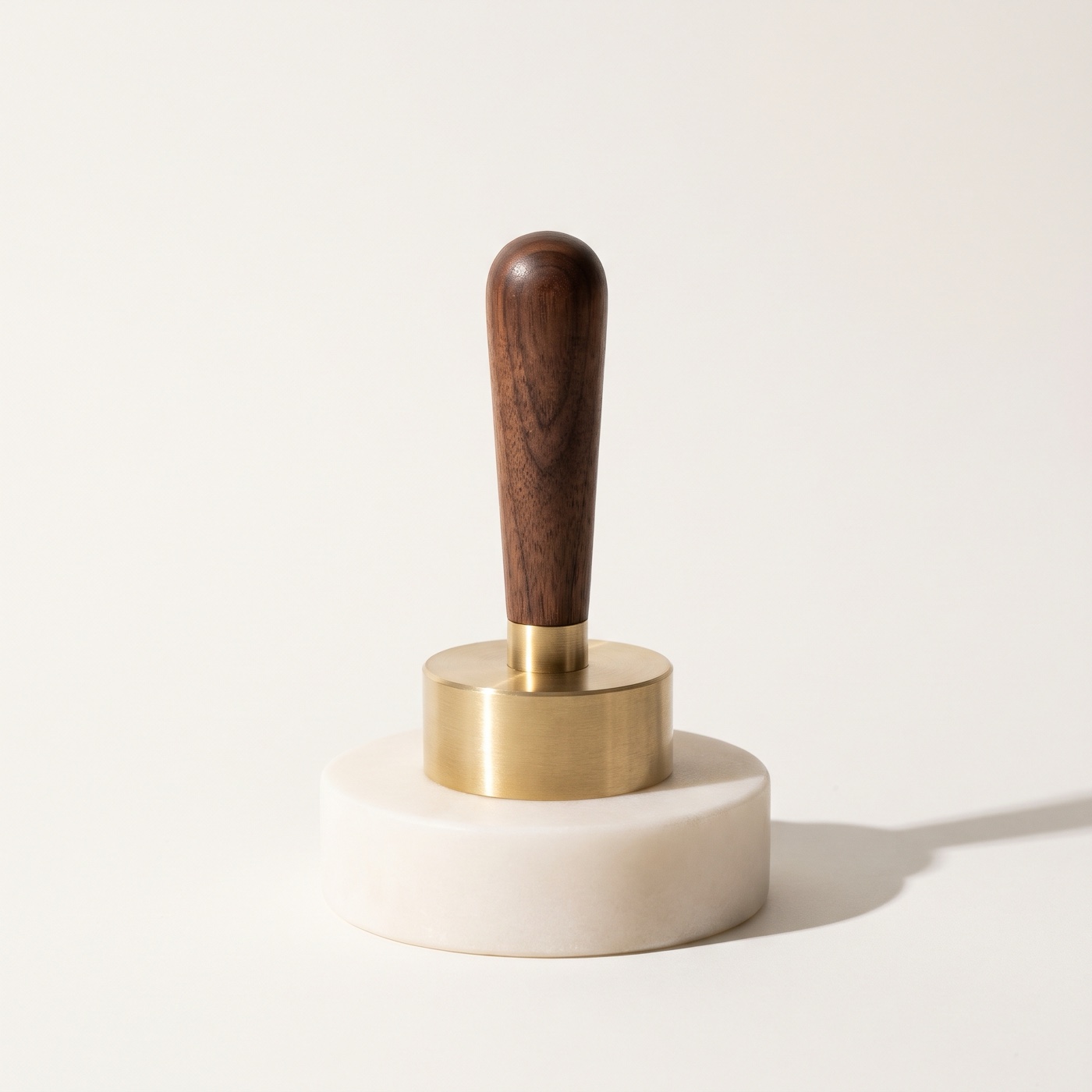
Quick Answer and Engineering Benchmarks
- Short answer: for a food-contact ice stamp, choose a lead-free alloy (bismuth eco-brass) or 304 stainless steel, and get the exact alloy grade in writing.
- Leaded brass C36000 contains 2.5–3.7% lead, which is 25,000–37,000 ppm.
- The NSF/ANSI 372 lead-free threshold is 0.25% weighted average lead, which is 2,500 ppm. We use it as a benchmark, not as a certification claim.
- Our target bismuth lead-free eco-brass measured about 0.0022% lead (≈ 22 ppm) in an optical-spectrometer reading of a supplier alloy sample.
- 304 stainless steel is a no-lead-added alternative: ask for the mill certificate. It costs more and needs a slightly longer contact time on ice.
| Material | Lead (wt %) | Lead (ppm) | Against the 2,500 ppm benchmark |
|---|---|---|---|
| Bismuth lead-free eco-brass (supplier alloy sample, spectrometer reading) | ~0.0022% | ≈ 22 ppm | ≈ 113× below |
| NSF/ANSI 372 lead-free threshold (reference line) | 0.25% | 2,500 ppm | The benchmark |
| Leaded free-machining brass C36000 | 2.5–3.7% | 25,000–37,000 ppm | ≈ 10–15× above |
| 304 stainless steel | No lead added to the grade | Ask for the mill certificate | Not applicable |
Figures are alloy specifications and one sample reading, not a production batch report. Batch documentation will be published before orders open. NSF/ANSI 372 covers drinking-water system components; it is cited here only as a lead-content yardstick.
Why the alloy grade matters on ice
Brass is copper and zinc. To make it easy to machine, many shops use C36000, a free-cutting brass with lead added so the chips break cleanly. It is an excellent engraving metal and a common stock choice for stamps, which is exactly why the question matters: a stamp seller who does not name the alloy may be using it.
Ice stamps touch wet, cold ice for a few seconds and the cube then goes into a drink. We would rather remove lead from the question than argue about exposure, so our target alloy is a bismuth lead-free eco-brass, with 304 stainless steel as the second option.
The lead numbers, side by side
Percent and parts-per-million are the same measurement written two ways: 1% is 10,000 ppm. The table in the quick answer is the short version; here is the arithmetic.
- Bismuth eco-brass: ~0.0022% × 10,000 = ≈ 22 ppm.
- NSF/ANSI 372 threshold: 0.25% × 10,000 = 2,500 ppm, so the sample reading is about 2,500 ÷ 22 ≈ 113 times lower.
- C36000: 2.5–3.7% × 10,000 = 25,000–37,000 ppm, roughly 10 to 15 times the threshold and more than 1,000 times the sample reading.
The ≈ 22 ppm figure comes from an optical-spectrometer reading of a supplier alloy sample. It is not a production batch result and not a certification. Our process is to spectrometer-check each production batch and publish the sheet before launch. For the longer metallurgy discussion see Lead-Free Brass, C36000, and What to Ask Before You Buy.
The 4-question buyer checklist
Ask any ice stamp seller these four questions before you pay. A good seller answers in a sentence. Silence, vague wording or a link to a generic “safe materials” page is information too.
| # | Question | A good answer | A red flag |
|---|---|---|---|
| 1 | What is the exact alloy grade of the contact face? | A named grade, such as a bismuth lead-free eco-brass or 304 stainless steel | “Premium brass” or “food-grade metal” with no grade |
| 2 | Do you have an optical-spectrometer reading or batch sheet? | A reading for the alloy sample, and a per-batch sheet that is checked before dispatch | No document, or a certificate for a different product |
| 3 | Is it bismuth eco-brass, or leaded C36000 with 2.5–3.7% lead? | Bismuth eco-brass, with the lead figure stated in % or ppm | C36000 or “free-machining brass”, or an unwillingness to say |
| 4 | Is there a 304 stainless steel option? | Yes, with the extra price and the longer contact time disclosed | Stainless described as “stainless” with no grade |
One more rule: never accept “certified safe”, “safe” or “non-toxic” as a substitute for numbers. A claim without an alloy grade cannot be checked.
Brass or 304 steel: which lead-free route?
Both avoid leaded brass. Pick on how you stamp, not on lead.
| Bismuth lead-free brass | 304 stainless steel | |
|---|---|---|
| Proposed price (2-inch face) | $89 (1.5-inch $69, 2.5-inch $109) | $104 (1.5-inch $84, 2.5-inch $124) |
| Contact time on ice (starting point) | About 2–3 seconds | About 4–5 seconds |
| Look | Warm gold, ages gracefully | Cool grey, stays bright |
| Lead position | Target ≈ 22 ppm (sample reading) | No lead added to the grade; request the mill certificate |
If your bar or kitchen standard says “stainless only”, choose 304. If you want the classic warm look and quicker impressions, choose the lead-free brass. Our guide on brass versus 304 stainless goes into the trade-offs.
What we claim, and what we don’t
We state alloy grade and measured values and nothing broader. We do not claim regulatory approval or a certification for our ice stamps, we do not describe any product as having no lead at all, and we do not make claims about other sellers’ products. This is a pre-launch prototype: checkout opens after material documentation and production samples are published.
The practical advice stands for any seller, including us: get the grade, get the document, and compare the numbers.
Quick questions, straight answers
Is a brass ice stamp food safe?
It depends on the alloy. Leaded free-machining brass C36000 contains 2.5–3.7% lead (25,000–37,000 ppm). A bismuth lead-free eco-brass or 304 stainless steel avoids that. Ask any seller for the exact alloy grade in writing.
What is C36000 brass?
C36000 is a free-machining brass with about 2.5–3.7% lead added so it cuts cleanly. It is common in stamps and fittings, which is why asking for the alloy grade matters.
What does 22 ppm lead mean?
It means about 0.0022% lead by weight. Our target bismuth eco-brass read about 22 ppm in an optical-spectrometer reading of a supplier alloy sample, versus the 2,500 ppm (0.25%) NSF/ANSI 372 benchmark.
Does 304 stainless steel contain lead?
Lead is not part of the 304 grade. Ask the seller for the mill certificate to confirm the specific product.
Pick the metal, then check the mark.
See the lead-free brass stamp or the 304 stainless steel version, then check your artwork at final size in the free studio before anything is machined.