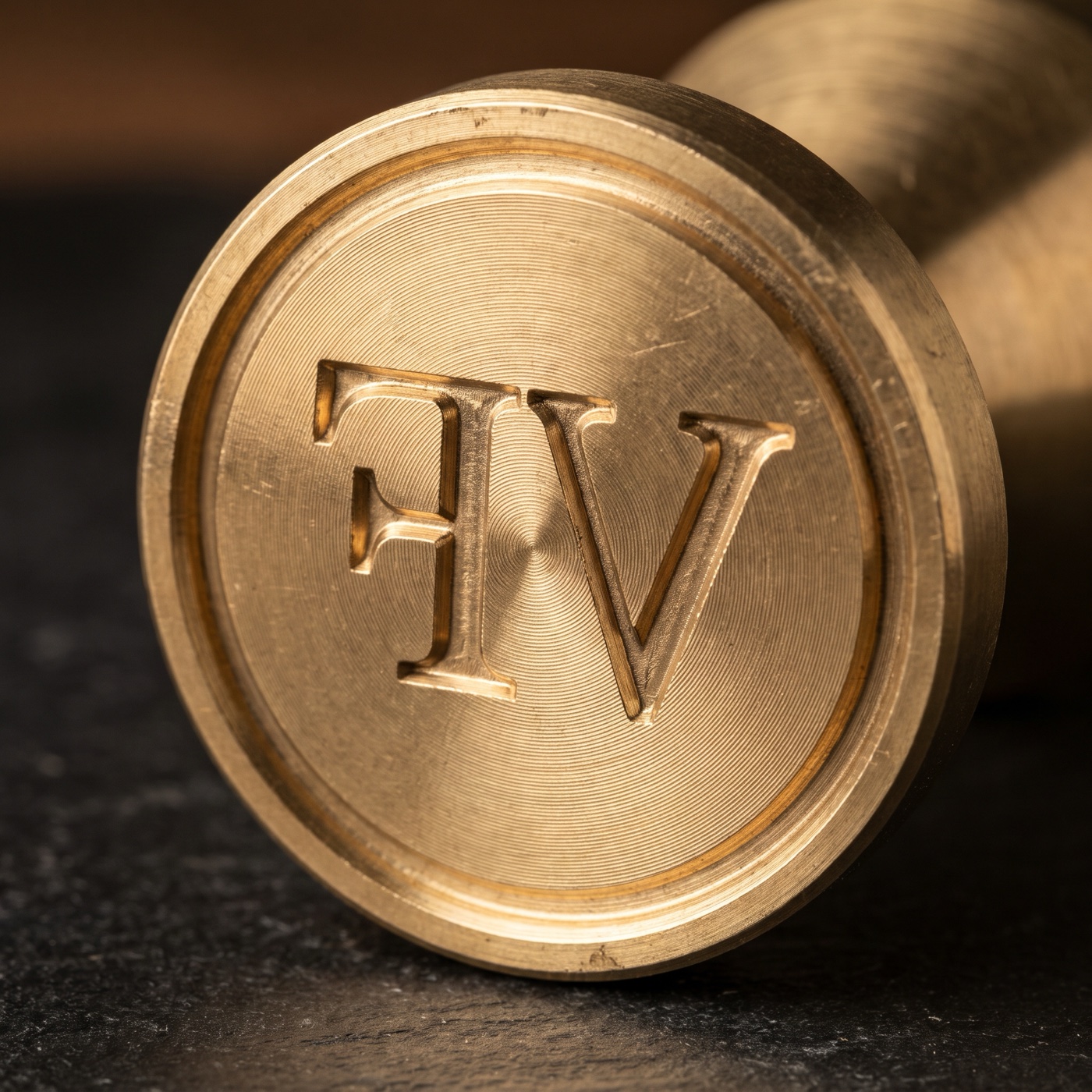
Quick Answer and Engineering Benchmarks
- Target depth: cut ice stamp relief to at least 2.8 mm with CNC milling.
- Shallow engraving under 1.5 mm lets meltwater pool and the stamp floor touch the ice. Mid-depth 1.5–2.2 mm works for bold marks. Deep ≥ 2.8 mm keeps the floor clear.
- Enclosed letters (A, O, R, B, D, P, Q) trap meltwater in their counters because the raised stroke blocks side drainage.
- Minimum cavity gap: keep every recessed gap at or above 0.80 mm so water does not bridge between strokes.
- Depth does not fix thin lines: strokes under 0.50 mm still blur at any depth.
| Class | Relief depth | Behavior on ice | Verdict |
|---|---|---|---|
| Shallow laser or shallow mill | < 1.5 mm | Meltwater pools; floor touches ice; soft edges | Avoid for ice |
| Mid-depth | 1.5–2.2 mm | Fine for bold letters; marginal for enclosed counters | Acceptable for simple marks |
| Transition zone | 2.2–2.8 mm | Approaching target; usually clean | Good |
| Deep CNC relief (our target) | ≥ 2.8 mm | Floor stays clear; room for meltwater below the contact plane | Preferred |
| Minimum recessed gap | ≥ 0.80 mm | Prevents capillary bridging between strokes | Required at final size |
Depth classes are engineering guidelines. The 2.8 mm figure is our CNC design target; documented depth measurements from production samples will be published before orders open.
Three depth classes, compared
Depth is the distance from the stamp’s contact surface down to the recessed floor. Ice stamps work by melting a thin layer under the raised artwork; the recess is where the displaced water goes.
- Shallow (< 1.5 mm): typical of laser marking and shallow milling. The floor sits almost level with the artwork, so water has nowhere to collect except against the ice, and the whole face softens.
- Mid-depth (1.5–2.2 mm): works for large letters with open shapes, but there is little reserve once the stamp has pressed into the ice.
- Deep (≥ 2.8 mm): leaves a clear reservoir below the contact plane and keeps the floor off the ice even when the surface is slightly uneven.
Ice is not perfectly flat, and the stamp melts in under pressure. That is why the recess needs margin beyond the depth of the visible mark.
Meltwater and capillary action
Water clings to metal walls. In a very narrow gap, surface tension (capillary action) holds water against both walls and pulls it along the gap, which is what allows a tiny film to bridge two neighboring strokes. The narrower the gap, the stronger the effect; widening the gap weakens the effect, and a deeper recess gives the water room to drop away from the contact plane.
The two numbers work together. Depth gives meltwater somewhere to go; gap width decides whether it stays where it was generated. Neither one substitutes for the other.
Enclosed letters: A, O, R, B and friends
The inside of an A, O, R or B (its counter) is an island of recessed floor surrounded by raised stroke. Meltwater made inside that island cannot run sideways because the stroke blocks it; it can only fill the pocket or climb the walls.
- Deep pockets give the water room and keep the floor off the ice.
- Open counters (large sans-serif forms) are more forgiving than tight ones (small serif B or R).
- Other enclosed shapes: D, P, Q, 4, 6, 8, 9, 0 and the ampersand.
- A sturdy typeface with open counters is the cheapest drainage upgrade you can make.
A deep, narrow pocket is harder to cut cleanly than a wide one, because the tool that fits a very small slot is slender and must reach deep. That is one reason the studio flags narrow gaps: the narrowest cavity usually limits the design, not the depth.
The 0.80 mm minimum cavity gap
We screen recessed gaps at a minimum of 0.80 mm at final size, and raised strokes at 0.50 mm. Below those numbers, meltwater bridges the gap, rounds off the edges and the impression blurs, no matter how deep the cut.
If your logo has a tight gap, you can enlarge the stamp, thicken the artwork or simplify the shape. Make the change in the studio rather than hoping the cut will rescue it.
How to check any ice stamp
You can screen a stamp you own in five minutes, with a torch and a ruler.
- Hold a torch at a low angle across the face. A recess you can barely see is too shallow to hold water.
- Measure relief with the depth rod of a caliper. Look for 2.8 mm or more.
- Check the narrowest recessed gap with a 0.80 mm feeler gauge: it should slide in.
- Check the narrowest raised stroke: it should be at least 0.50 mm.
- Test on a clear cube after tempering the ice, and note whether the counters of A, O, R and B stay crisp.
Quick questions, straight answers
How deep should an ice stamp be engraved?
Our CNC target is at least 2.8 mm. Under about 1.5 mm, meltwater pools and the stamp floor touches the ice. Between 1.5 and 2.2 mm is acceptable for bold, open marks.
Why do letters like A, O, R and B blur first?
Their counters are enclosed by raised stroke, so meltwater cannot drain sideways. Deeper relief and open-counter fonts help.
What is the minimum gap for an ice stamp?
We screen recessed gaps at 0.80 mm or more and raised strokes at 0.50 mm or more at final size.
Does a deeper engraving fix thin lines?
No. Strokes under about 0.50 mm still blur at any depth. Fix the artwork, not the cut.
See the gaps before the cut.
Check your logo at final size, with fine strokes and narrow gaps flagged, then see the 2-inch stamp cut to a ≥ 2.8 mm relief target.